Most people decide to treat forehead lines for the same reason they schedule their first botox appointment at all: they want their face to look as relaxed as they feel. Forehead lines have a way of overstating fatigue or stress, even on a good day. The art of forehead wrinkle injections is getting smoother skin while keeping your eyebrows animated and your personality intact. That takes thoughtful dosing, precise placement, and a proper read of how your unique muscles fire.
I have treated thousands of foreheads with neuromodulator injections, including botox cosmetic and other botulinum toxin treatments, and the same questions show up at nearly every botox consultation: How many units do I need? Where exactly do the injections go? Will my eyebrows look heavy? Let’s break down the answers, along with the small technical decisions that separate safe, natural looking botox from the frozen look everyone wants to avoid.
The anatomy that dictates your dose
Forehead lines form primarily from the frontalis muscle, a broad, thin sheet that lifts the brows. The challenge is that the frontalis is the only elevator in the upper face, while multiple muscles depress the brows. If you relax the frontalis too much with wrinkle relaxing injections, the brows can drop. If you avoid it entirely, lines persist and can deepen. Nuance lives in mapping how your individual frontalis fibers activate and how they balance against the frown complex.
The frown complex involves the corrugator supercilii, procerus, and depressor supercilii. These muscles pull the brows inward and down, creating vertical “11s.” Treating them with botox for frown lines reduces the downward pull, which often permits a lighter dose in the forehead and can create a subtle botox brow lift. Many of the best forehead results come from combining upper face botox across both regions rather than treating the forehead in isolation.
The takeaway is simple: the right number of units is not just about the depth of forehead lines, but about the balance between lifters and depressors.
Typical dose ranges for forehead wrinkles
Most licensed botox injectors will discuss dosing in ranges. Products have different unit potencies, so this assumes on-label botox cosmetic units. For the forehead (frontalis), a common starting range is 6 to 20 units. That is a broad window because foreheads vary a great deal. Light “baby botox” or preventative botox often lives at the lower end, 6 to 10 units spread out to soften fine lines without significantly changing movement. Moderate lines in average-strength muscles might call for 10 to 16 units. Strong foreheads, tall foreheads, or etched lines that crease even at rest may need 16 to 20 units, sometimes more, though I rarely exceed the low twenties for the frontalis alone.
Those numbers assume you are also treating the glabella, the 11s between the brows, which typically requires 12 to 25 units depending on muscle strength. Many providers consider 20 units a standard glabellar dose in a first-time botox face treatment, then adjust at follow-up. If you skip the glabella, the forehead often needs more units to control lines, which can heighten the risk of brow heaviness. Balanced dosing remains the safer path to natural results.
Where injections actually go
Injections are placed into the frontalis muscle in a pattern that fits your anatomy. The needle usually enters at a shallow angle, with tiny aliquots in multiple sites rather than a few large boluses. Spreading the botulinum toxin injections gives a smoother effect and avoids creating flat, heavy patches.
A few practical rules guide placement:
- Stay at least 1.5 to 2 centimeters above the bony orbital rim to avoid brow drop. Low injections weaken fibers that support the brow. Treat the areas where you see dynamic movement when you lift your brows, not necessarily every square centimeter of the forehead. Consider the forehead height. A tall forehead can require an extra row of micro injections to spread the effect evenly and avoid a visible line of demarcation between treated and untreated muscle. When someone has strong lateral frontalis activity that creates diagonal lines, small outer injections help, but the injector should respect the tail of the brow to prevent unintended lateral brow drop.
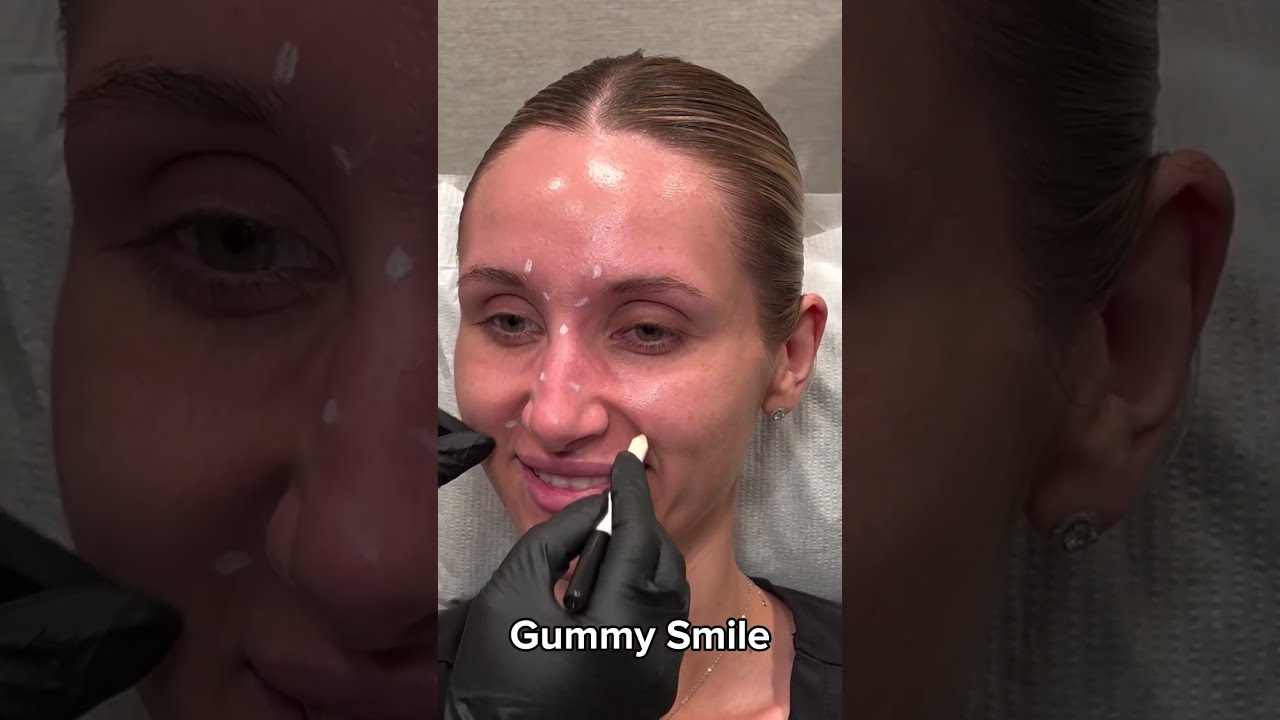
Expect a grid-like series of small points across the upper and mid forehead, with careful spacing along the hairline and lateral edges. The glabella, if treated, is injected more centrally between the brows and slightly above, keeping a safe distance from the eyelid elevators.
Choosing between baby botox, standard dosing, and targeted tweaks
Baby botox, or micro dosing, suits first-timers, expressive professionals who rely on eyebrow movement (newscasters, performers, teachers), and anyone with a history of heavy outcomes. It uses smaller units per site, often 1 unit per point across 6 to 12 points, to gently soften lines. It does not erase, it blunts. Results look particularly good in younger skin with early fine lines.
Standard dosing aims to smooth present lines while preserving some lift. Most people gravitate here after trying light doses and wanting a touch more smoothing. I prefer to adjust in 2 to 4 unit increments at follow-up rather than leap to maximums on day one.
Targeted tweaks come into play after we see your pattern under botox. If the center of your forehead stays too active or if a small arched line appears near the hairline, we add micro injections where needed. If you feel too heavy, we allow the product to wear, then at the next botox session, we lift the injection line higher or reduce units over the central brow. Precision botox treatment builds over time, not just at a single appointment.
How I map a forehead during a consultation
I ask patients to make three expressions: lift the brows high, scowl as if concentrating, and relax completely. I watch for four details. First, where the deepest horizontal creases form and whether they continue at rest. Second, how the brow peaks move, particularly the outer third. Third, whether the glabella pulls strongly downward, creating an antagonistic tug-of-war. Fourth, whether the eyelids look heavy at baseline, which demands a conservative forehead plan.
I palpate lightly to feel frontalis thickness. A thick frontalis often tolerates more units without droop, while a thin frontalis calls for fewer units and higher placement. I also note forehead height and hairline position. People with very tall foreheads often need an extra row of skin smoothing injections higher up to keep an even result.
Preventative botox for forehead lines
If lines only appear with expression and vanish at rest, preventative dosing can keep them from etching into the skin. The goal is not zero movement. With neuromodulator injections in the 6 to 10 unit range to the frontalis, refreshed every 3 to 4 months, many people maintain smoothness for years without ever needing heavier doses. That said, I avoid treating early 20s patients who have no visible lines and no strong habits like habitual brow lifting. Over-treating too early can create an unnatural stillness and may encourage the depressors to dominate, which paradoxically makes brows feel lower.
Managing the risk of brow heaviness
Brow heaviness is the fear most often voiced, usually from a prior bad experience. It nearly always comes down to technique and balance. The safest way to avoid heaviness is to treat the glabella adequately while keeping forehead points high. If someone is extremely bothered by heaviness risk, I will purposely under-dose the central forehead and place small units laterally and higher. A subtle botox brow lift can be achieved by reducing the downward pull of the corrugators and procerus while leaving some frontalis activity intact laterally.
Edge cases exist. If a patient already has low-set brows or heavier eyelids, I reduce forehead units and may rely more on glabellar treatment. If the brows sit high and the forehead is very expressive, we can treat botox St Johns a wider field with standard units. Communication matters. Some patients value absolute smoothness over mobility; others would rather keep movement and accept a faint line. There is no one-size dose.
How long results last, and why maintenance matters
Duration varies with metabolism, dose, and muscle strength. For botox skin treatment in the forehead, most patients enjoy smoothing for 3 to 4 months. Athletes and fast metabolizers might see 10 to 12 weeks. Heavier doses can last a bit longer, but I am careful not to chase longevity at the expense of expression. Long lasting botox is desirable, but results that match your face are better than extra weeks of flatness.
Maintenance keeps lines from re-etching, but schedules need not be rigid. Many patients alternate higher and lower doses between visits, or extend appointments to 4 or even 5 months once their lines are under control. Think of this as wrinkle control injections over seasons rather than a single event. If you are planning for a photo-heavy period, schedule a botox procedure 2 to 3 weeks before the event, which allows time for full onset and any small refinements.
What to expect on treatment day
A botox session for the forehead is quick. Most clinics cleanse the skin, sometimes use ice or a vibration device, and proceed with multiple tiny injections using a micro-fine needle. Discomfort is brief. You can expect a series of points across the forehead and a few between the brows if the glabella is included. The entire cosmetic injectable treatment typically takes 10 to 20 minutes.
Aftercare is simple. Stay upright for 4 hours, avoid rubbing the area, skip intense exercise for the day, and hold off on facials or saunas for 24 hours. Makeup can usually be applied after a couple of hours. Small bumps at injection sites fade within minutes to an hour. Bruising is uncommon but possible, particularly if you take supplements or medications that thin the blood. Most people return to work immediately.
When results appear, and how we refine them
Botox results begin to show at day 3 to 5, with a full effect around day 10 to 14. I schedule a follow-up or at least ask for photos at the two-week mark, especially for a first-time patient or a new injector-patient pairing. That is when we catch asymmetry, small residual lines, or the need for an extra micro point. Refinements typically involve 2 to 6 extra units, placed strategically. These small tweaks are part of customized botox treatment and often define the difference between good and excellent outcomes.
Natural, not frozen: the aesthetic philosophy
Natural looking botox relies on three principles. First, treat the movement pattern, not just the line. Second, respect the frontalis as your only elevator and keep doses suitably light and high. Third, balance with the frown complex so the brow line stays open, not pressed downward. Subtle botox results still allow you to raise your eyebrows, only without stamping deep grooves each time you react.
Over several years, your dose can go down as the habit of over-recruiting the forehead eases. That is the quiet benefit of consistent, professional botox treatment. When facial expression no longer creases the same track repeatedly, the skin’s surface looks smoother even between appointments.
Safety, product choice, and injector expertise
Neuromodulator injections are among the most studied and widely used non surgical wrinkle treatments. When performed by a certified botox provider who understands anatomy and dosing, the safety profile is excellent. Side effects are typically mild and temporary: pinprick marks, light tenderness, a short-lived headache, or a small bruise. The rarer events we all want to avoid, like brow or eyelid ptosis, are strongly linked to product migration from low, imprecise injections or to treating the wrong muscle group for the patient’s anatomy.
Different brands of botulinum toxin cosmetic exist. Units are not interchangeable across brands. What matters more than the label is a licensed botox injector who can convert experience to judgment in real time. If you are curious whether you need botox for crow’s feet, for example, or if your primary concern is forehead and frown lines, ask for a comprehensive evaluation rather than a per-area upsell. Full face botox, when appropriate, achieves harmony: the forehead, glabella, and crow’s feet working together to frame the eyes.
Special scenarios that change the plan
Some patients have a long-standing habit of lifting brows to keep their eyelids from feeling heavy. Treating the forehead aggressively in this group can be frustrating. I flag these cases during the botox consultation and often recommend a conservative approach, possibly combined with a small botox brow lift effect via frown line treatment, to reduce the need for eyebrow elevation. If eyelid heaviness remains a concern, I refer for an oculoplastic assessment rather than fight anatomy with more product.
Patients with very deep, etched forehead lines might not see total erasure from neuromodulators alone. We can soften those tracks markedly with anti wrinkle botox, then layer skin-directed treatments like microneedling, fractional laser, or collagen-stimulating skincare. I set expectations early so no one expects a single round of injections to reverse decades of creasing. This combination approach fits with facial rejuvenation injections broadly, where botox controls movement and other therapies improve texture.
Men often require higher units due to stronger frontalis and thicker skin. That might mean 12 to 20 units in the forehead and 20 to 30 in the frown complex, adjusted after we see the first cycle’s response. A heavier dose does not have to mean a heavier look if placement is precise.
Cost, value, and realistic budgeting
Botox pricing varies by region and by provider expertise. Some clinics charge per unit, others per area. Forehead dosing, as discussed, is rarely a standalone because of the balance with the glabella. If you see forehead-only pricing that is very low, ask how they handle brow heaviness risk and whether additional units will be needed later. Many patients find that paying for professional botox treatment with careful planning saves money over time compared to chasing corrective work.
If you prefer a firm estimate before committing, request a units-based quote range during your botox appointment: for example, 10 to 14 units in the forehead and 16 to 24 in the frown lines, with potential 2 to 4 unit refinement at follow-up. That level of transparency builds trust and helps you compare apples to apples across clinics.
The role of symmetry and micro asymmetries
Almost every face has asymmetry. One brow sits slightly higher, or one frontalis side recruits more readily. During injections, I adjust by placing a unit or two more on the stronger side, or by lifting the injection line one grid higher on the side that tends to drop. These are quiet, nearly invisible decisions that a seasoned injector makes on the fly. They matter. If you have noticed a higher left brow in selfies, mention it. A small dose difference can even the playing field.
Combining forehead injections with other facial areas
While the forehead sits center stage, a polished upper-face result often involves crow’s feet treatment. Softening the crinkling around the outer eyes keeps the upper third of the face cohesive. If the forehead is glassy and the crow’s feet are strong, the contrast can look odd. A few well-placed units around the lateral orbicularis can create smooth, natural transitions.
Some patients pair upper face botox with lower face adjustments, like botox for lip lines or chin dimpling. These require even more nuance because lower face muscle relaxing affects speech and smile. In most cases, I prefer to stage treatments: get the forehead and frown lines right first, then add smaller zones at a follow-up so you can clearly feel each change.
What good looks like: a brief, real-world example
Consider a 38-year-old woman with moderate horizontal lines, a tall forehead, and strong corrugators. On maximal lift, three dominant lines appear across the center, and the lateral tails pull slightly upward. At rest, faint etching remains in the central two lines. She previously had heavy brows with forehead-only treatment.
My plan: treat the glabella at 20 units across five points, placed safely above the bony landmarks. Place 12 units in the frontalis at high and mid-high points, avoiding low central placement. Add two lateral points of 1 unit each to catch the diagonal creases without touching the brow tail. At two weeks, her movement is present but reduced, lines are 70 percent softer, and the brows sit open. A 2-unit refinement in the high central forehead completes the smoothing without altering expression.
Now compare a 45-year-old man with a shorter forehead, strong, etched lines that remain at rest, and heavy lateral brows. I would plan for 16 to 18 units in the forehead placed high, 24 units in the glabella, and a discussion about skin-directed treatments for the etched lines. Expect a 60 to 80 percent improvement in the first cycle, with a second cycle at three months to build on the results.
My simple checklist for patients before forehead injections
- Arrive without heavy makeup on the forehead so mapping is easier. Avoid alcohol, aspirin, and fish oil the day before if you want to minimize bruising risk, unless your physician advises otherwise. Bring a photo of your ideal result in terms of movement, not just smoothness. A short video raising and relaxing brows helps. Share any history of droopy eyelids, eye surgery, or unusual responses to prior botulinum toxin treatment. Plan light activity after your botox procedure and keep workouts gentle the same day.
How to choose the right clinic and injector
Look for a botox clinic that welcomes questions about dosing rationale, not just price per unit. An expert botox injector should discuss your anatomy, not general slogans. Ask how they handle follow-ups and refinements. Ask how they prevent brow heaviness. If they offer masseter botox or jaw slimming botox as well, that suggests broader experience in facial aesthetics botox, but the best sign is still a careful assessment and a tailored plan.
Ask to see botox before and after photos of foreheads similar to yours. Pay attention to where the brows sit, not just the smoothness of the skin. Natural, confident results look like the person is well rested, not reprogrammed.
A note on therapeutic versus cosmetic goals
Therapeutic botox addresses medical concerns like migraines or muscle spasm. Cosmetic botox focuses on wrinkle reduction injections and facial line smoothing treatment. Sometimes the two intersect. Patients who receive therapeutic dosing in the forehead for headaches may notice cosmetic changes, and vice versa. Coordination between providers is wise so doses do not overlap excessively.
Bottom line: how many units and where?
Expect the frontalis to need roughly 6 to 20 units in most adults, placed high and evenly to preserve some lift. Expect the glabella to require 12 to 25 units for balance and to help create a soft, open brow. Placement follows your movement pattern: more points where lines form, fewer where they do not. Light baby botox works well for prevention and subtlety, while standard dosing suits moderate lines. Stronger muscles or etched lines may call for higher totals and staged treatments.
The best forehead outcomes come from personalized botox injections that respect anatomy and preference. When done well, forehead wrinkle injections are a quiet intervention. Friends say you look fresh, not frozen. You raise your brows, make your point, and the lines no longer steal the scene. That is the promise of professional cosmetic injections when they are mapped, measured, and adjusted with care.